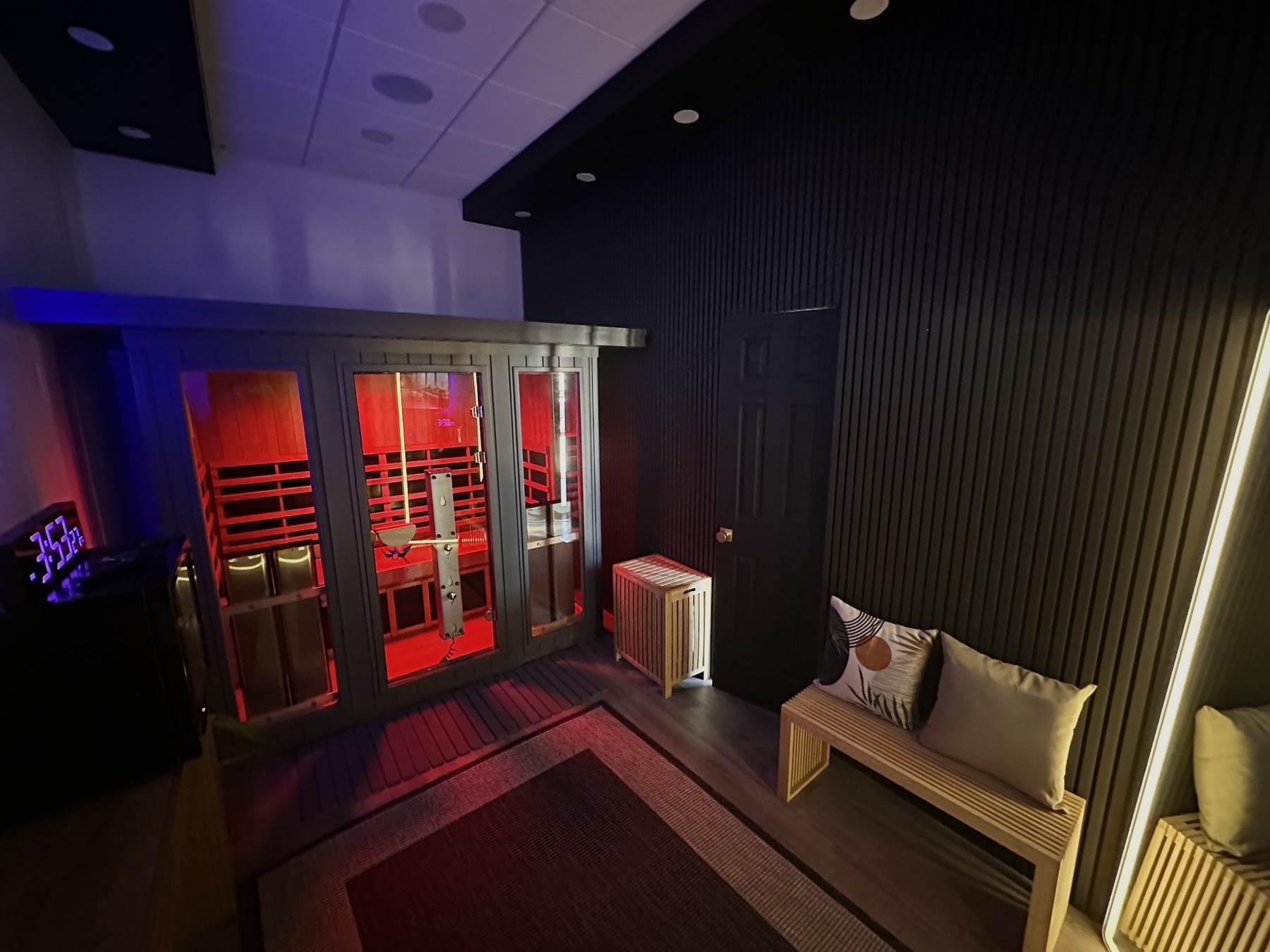
If you've only ever sat in a traditional Finnish-style sauna, an infrared sauna can feel surprisingly different — and for a lot of people, a lot more comfortable. Both are built to make you sweat, but they get there in very different ways.
How they actually differ
A traditional sauna heats the air in the room, often to 170–200°F, and your body warms up indirectly as it absorbs that hot air. An infrared sauna uses infrared panels to heat your body directly, while the air around you stays much cooler — usually 120–150°F. That's why an infrared session can feel more tolerable for a longer stretch, even though you're still sweating just as much, if not more.
Because the heat penetrates a bit deeper into soft tissue rather than just warming your skin, a lot of guests find infrared sessions better suited for muscle recovery after a workout, not just relaxation.
What that means for your session
- +Relieves muscle stiffness & soreness
- +Enhances circulation
- +Speeds up recovery
- +Flushes out toxins
- +Promotes relaxation
At Sauna House, every private suite pairs infrared heat with a cold plunge right next door, so you can move straight from a 20–30 minute infrared session into 2–5 minutes of cold water — the contrast is where a lot of the recovery benefit really shows up.
New to infrared? Your first visit is a great time to try it — ask about our new guest offer when you book.