Contrast therapy is the deliberate alternation of heat and cold in one session. Not a sauna on Tuesday and an ice bath on Friday — heat, then cold, then back again, within the same half hour.
What is actually happening
Heat opens your blood vessels and moves blood toward the surface of your skin. Cold does the opposite, constricting them and pushing blood toward your core. Alternating the two creates a pumping action that heat or cold alone does not.
That is the mechanism people are after. It is also why the gap between the two matters: if the plunge is in another room, the effect is diluted by the walk.
The order
Heat first. You want to be thoroughly warm before the cold, both because the contrast is the active ingredient and because getting into cold water cold is simply unpleasant enough that most people do it once and never again.
Finish is more open to preference. Finishing cold leaves you alert; finishing warm leaves you relaxed. If you are going to bed soon, end warm.
How long, and how many rounds
A reasonable structure for most people:
- +15–25 minutes in the infrared sauna at 120–150°F
- +1–3 minutes in the cold plunge at 32–55°F
- +A few minutes of rest
- +Repeat for a second round if you have the time
Start at the short end. The cold is harder than people expect the first time, and one honest minute beats three miserable ones you spend fighting.
Breathing is most of the cold
The hard part of a plunge is not the temperature, it is the gasp reflex. The single most useful thing you can do is make your exhale longer than your inhale — in for four, out for six — before you get in and while you are there.
People who learn that usually find the second plunge dramatically easier than the first.
Doing this in Dallas
The practical constraint is layout. Contrast therapy needs both temperatures close together, and a lot of studios have them in separate rooms, or have a shared plunge you have to queue for.
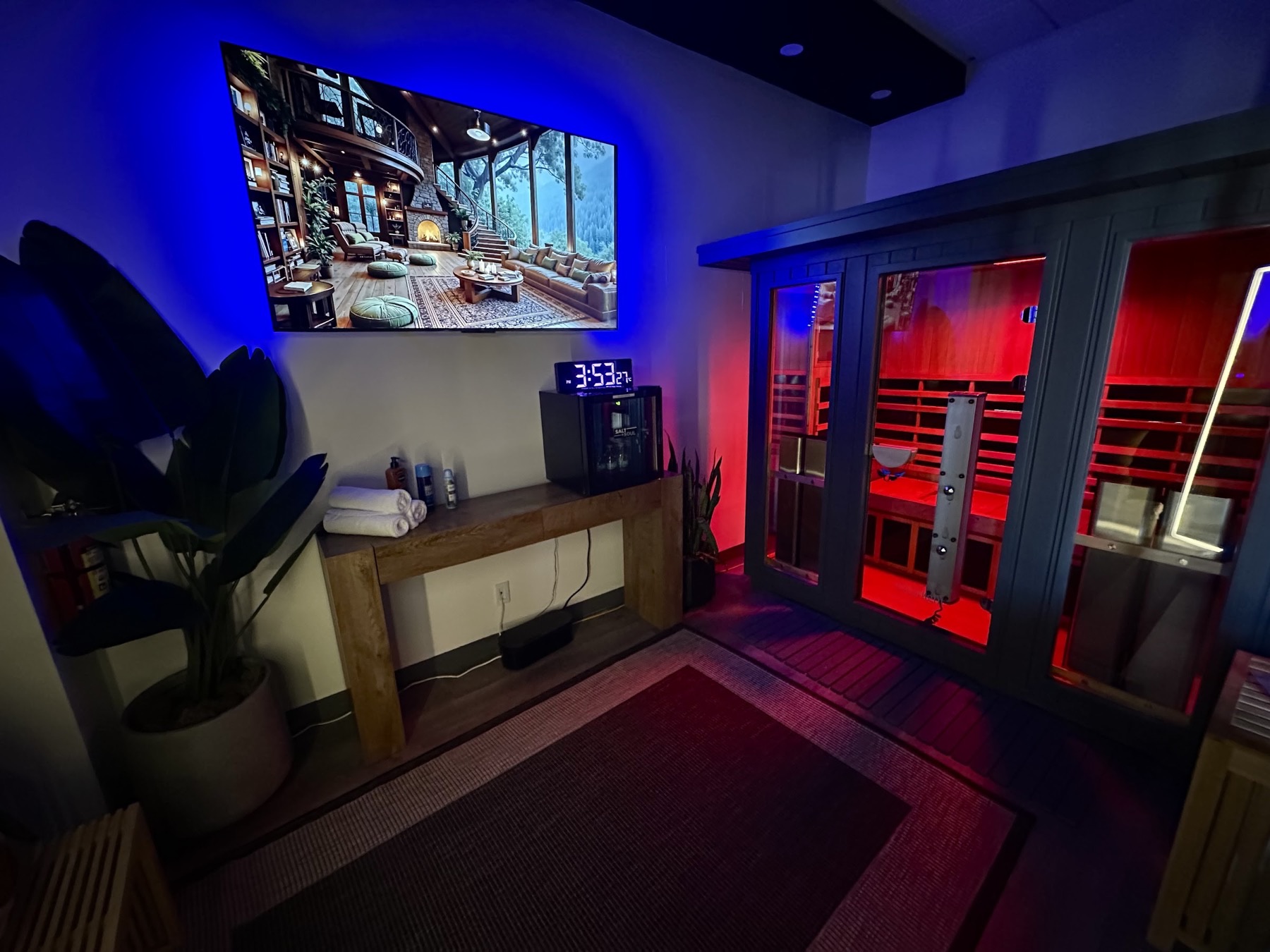
Our suites on Greenville Avenue have the infrared sauna and the cold plunge in the same private room, which is the arrangement contrast therapy actually wants. A first visit is $29.50 if you want to try a round or two before deciding.
Who should not do this
Contrast therapy puts real demand on your circulation. If you are pregnant, or you have a heart condition, high or low blood pressure, diabetes or neuropathy, or a circulatory condition, or you take medication that affects how your body handles temperature, speak to your doctor first. We are a recovery studio, not a medical provider, and nothing here is medical advice.
Common questions
How many rounds should a beginner do? One. Add a second once the cold stops being a shock.
Does the cold cancel out the sauna? No. The alternation is the point.
How long is a session? Our standard suite bookings give you the room to yourself; most people run 45–60 minutes including rest.
What do I wear? Swimwear, and bring a change of clothes for afterwards.